CAMX 2026: Trends and Takeaways in Composites and Advanced Materials

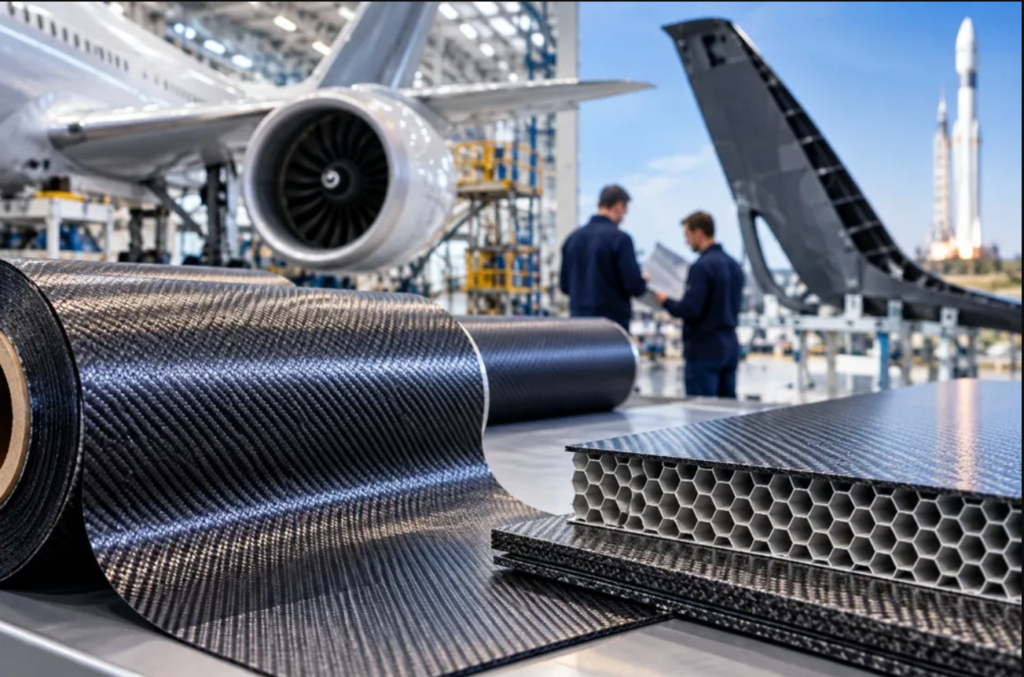
The composites industry continues to evolve as manufacturers pursue lighter, stronger, and more efficient materials for increasingly demanding applications. At CAMX 2026, held September 21–24 in Atlanta, much of the conversation centered on a challenge that extends beyond material performance: how to manufacture advanced composite components more efficiently, consistently, and at greater scale.¹
Composite materials already play an important role in aerospace, defense, automotive manufacturing, and renewable energy. Their high strength-to-weight ratios, corrosion resistance, and design flexibility make them valuable in applications where conventional materials cannot easily meet the same performance requirements. As adoption expands, however, manufacturers face growing pressure to reduce production costs, shorten processing times, improve quality control, and address the environmental impact of composite products.
Following CAMX 2026, the Reade team identified six developments that reflect these priorities, from advances in thermoplastic processing and recyclable resin chemistry to automated inspection systems and more efficient manufacturing methods.
1. The Industry Is Increasingly Focused on Scalable Production
Manufacturing scale was a prominent theme surrounding CAMX 2026. National Composites Week, held shortly before the conference, adopted the theme “Composites are built to scale,” reflecting the industry’s growing emphasis on automation, production efficiency, and technologies capable of supporting higher manufacturing volumes.²
Although composite materials are already produced at substantial volumes in several industries, many high-performance applications continue to rely on relatively labor-intensive manufacturing processes. Aerospace components, for example, often require tightly controlled fiber placement, resin distribution, curing conditions, and inspection procedures. These requirements can introduce longer production cycles and greater variability than manufacturers encounter with conventional materials.
Increasing production volume therefore involves more than simply accelerating fabrication. Manufacturers must establish processes capable of maintaining consistent material properties and component quality while reducing the time and resources required for each part.
Automated fiber placement, improved molding technologies, faster curing systems, and more effective production monitoring are helping address these challenges. Their adoption also places additional demands on raw material suppliers, particularly when manufacturing processes require increasingly consistent reinforcement fibers, resin systems, and other specialized inputs.
2. Thermoplastics and Faster-Curing Systems Are Expanding Manufacturing Options
Resin technology was another important area of discussion, particularly developments intended to make composite manufacturing faster and more flexible.
Traditional thermoset composites rely on polymer matrices that undergo irreversible chemical crosslinking during curing. Once cured, these materials cannot be remelted and reshaped through conventional thermal processing. Thermoplastic composites behave differently because their polymer matrices can soften when heated and solidify again when cooled, creating opportunities for rapid forming, welding, and certain recycling processes.
Both technologies are evolving to address different manufacturing requirements.
Teijin Carbon has developed rapid-cure thermoset prepregs designed to reduce processing time in aerospace manufacturing. Its Tenax Q183 system, for example, can cure in approximately 20 minutes at 160°C without requiring an additional post-curing cycle.³ The shorter curing process offers manufacturers a potential way to increase production throughput while continuing to use established thermoset composite technologies.
Thermoplastic materials are advancing alongside these developments. Toray highlighted its Cetex thermoplastic composite products at CAMX, demonstrating continued investment in materials that support alternative manufacturing and joining processes.⁴
The distinction between these resin systems remains important. Rapid-cure thermosets can improve processing efficiency while maintaining the characteristics associated with thermoset composites. Thermoplastics offer different advantages, including the potential for reheating, welding, and material recovery, but can also require higher processing temperatures or specialized equipment.
For manufacturers evaluating either approach, material selection depends on the intended application, mechanical performance, thermal requirements, production volume, and qualification standards.
3. Recyclable Resin Technologies Are Addressing a Longstanding Challenge
Recycling remains difficult for many composite products, particularly those manufactured with permanently crosslinked thermoset resins. The same chemical structures that provide durability and environmental resistance during service can make composite components challenging to process at the end of their useful lives.
Wind turbine blades are a familiar example. Built to withstand decades of mechanical loading and environmental exposure, they frequently incorporate glass or carbon fiber reinforcement within durable resin systems. Separating those materials for recovery can require energy-intensive processing or specialized chemical treatment.
One development highlighted around CAMX 2026 was Techstorm’s vitrimer-based recyclable epoxy resin platform.
Vitrimers incorporate dynamic chemical bonds that can undergo controlled rearrangement or breakdown under appropriate conditions. This chemistry offers possibilities for recovering materials from composite structures that would otherwise be difficult to separate.
Techstorm’s technology is designed to support recycling at temperatures as low as 80°C through a targeted chemical degradation process. The company is initially focusing on carbon fiber-reinforced components used in wind turbine blade manufacturing, with the objective of recovering reinforcement fibers and reusing resin-derived materials.⁵
The approach is particularly interesting because recyclability is incorporated into the original material chemistry rather than addressed exclusively through downstream waste processing.
Commercial adoption will depend on whether these systems can achieve the mechanical performance, durability, processing efficiency, and cost requirements of conventional materials. Manufacturers must also consider how recovered fibers and resin components perform when incorporated into subsequent products.
4. Artificial Intelligence Is Becoming Part of Composite Inspection
As composite manufacturing becomes more automated, inspection technologies are evolving to identify production issues earlier and reduce the amount of rework required after fabrication.
Composite components can present complicated inspection challenges. Fiber misalignment, foreign object debris, dimensional inconsistencies, and other defects may develop during layup, resin infusion, curing, or subsequent processing. Depending on the application, these issues can affect structural performance or require additional inspection and corrective work.
Virtek highlighted its IRIS technology, which incorporates artificial intelligence and camera-based inspection into composite manufacturing workflows.
According to Virtek, its AI process monitoring system can return inspection results in under three seconds, giving manufacturing teams faster access to information about potential production issues. The system also supports traceability by recording inspection information throughout the manufacturing process.⁶
For manufacturers producing complex composite components, identifying an issue during fabrication can be considerably less expensive than discovering it after a part has been completed. Earlier inspection may reduce wasted materials, prevent unnecessary processing, and support more consistent production outcomes.
These systems complement established quality assurance procedures rather than replacing them. Inspection requirements still depend on the component, manufacturing process, and applicable industry standards, but faster feedback can help manufacturers maintain quality while increasing production rates.
5. Aerospace, Defense, and Hypersonics Continue to Push Material Performance
Alongside developments in manufacturing efficiency, CAMX 2026 highlighted continued demand for composite materials capable of operating under extreme conditions.
Aerospace propulsion systems, high-speed aircraft, spacecraft, and defense applications can expose materials to combinations of elevated temperatures, mechanical stress, thermal cycling, and oxidation. These environments often require specialized reinforcement architectures, advanced resin systems, or ceramic-based composite technologies.
Albany Engineered Composites presented advanced manufacturing capabilities for aerospace and defense applications, including technologies intended for demanding propulsion and hypersonic environments. Its broader portfolio includes three-dimensional woven structures, braided architectures, and specialized composite manufacturing processes.⁷
Hexcel also used CAMX to highlight materials and manufacturing developments supporting increased commercial aerospace production and next-generation defense and space applications.⁸
These applications demonstrate how composite performance depends on the interaction between material chemistry, reinforcement architecture, and manufacturing processes. A material suitable for a conventional structural component may not withstand the thermal or mechanical requirements of an advanced propulsion system, even when its room-temperature properties appear comparable.
The specialized nature of these applications creates additional demands for raw material consistency, documentation, and traceability. Manufacturers must be able to demonstrate that critical material characteristics remain within acceptable limits throughout production, particularly when components are subject to extensive qualification requirements.
6. More Efficient Manufacturing Can Also Reduce Material Consumption
Some of the most practical developments in composite manufacturing involve improving how existing materials are processed rather than introducing entirely new material systems.
Diab’s Advanced Kits illustrate this approach. The company’s precision-cut foam core solutions use CNC machining and specialized software to optimize how core materials fit the curvature of composite molds. Better geometric fit can improve processing consistency while reducing the amount of resin required during manufacturing.
Diab reports that its Advanced Kits can reduce resin consumption by up to 60% compared with traditional GS kits, although actual savings depend on the application and manufacturing process.⁹
Reducing excess resin offers benefits beyond the direct cost of raw materials. Lower resin consumption can contribute to lighter components, reduce unnecessary material handling, and improve the repeatability of certain manufacturing processes.
For composite manufacturers, these improvements are particularly relevant when scaling production. Small reductions in material consumption or processing time can become financially significant when applied across thousands of components, while better process consistency can help limit scrap and rework.
Manufacturing efficiency and sustainability are closely connected in this context. More accurate material preparation and better-controlled production processes can reduce waste while improving manufacturing economics.
What These Trends Mean for Advanced Materials Sourcing
The developments highlighted at CAMX reflect an industry working to expand production capabilities without compromising the performance characteristics that make composites valuable.
Advances in resin chemistry, reinforcement technologies, manufacturing automation, and inspection are creating additional opportunities for composite materials across aerospace, defense, energy, and industrial manufacturing. These technologies also introduce new considerations for procurement teams responsible for maintaining a reliable supply of specialized raw materials.
Faster manufacturing processes can be more sensitive to variations in material properties, particularly when production conditions have been optimized around a narrow range of acceptable characteristics. New resin systems may introduce different storage, handling, or processing requirements, while high-performance applications frequently demand additional documentation and traceability.
Material availability is another consideration. A technically promising product must be obtainable in appropriate quantities and specifications before it can be incorporated into commercial production. Manufacturers introducing new materials may also need to evaluate alternative sources, particularly when supply is limited to a small number of qualified producers.
Reade supports manufacturers navigating these requirements through its global network of specialty materials suppliers and its experience sourcing materials for technically demanding applications.
The company’s sourcing capabilities help customers identify materials that meet their chemical, physical, and quality requirements while coordinating procurement through established domestic and international producer relationships. Reade also offers specialized processing and packaging services for applications where standard manufacturer specifications or material forms do not fully meet production needs.¹⁰
For manufacturers developing new composite products or expanding existing operations, access to appropriate raw materials is an important part of maintaining production consistency. Working with a sourcing partner that understands material specifications, supplier relationships, and the practical requirements of industrial procurement can help simplify that process.
Looking Ahead
CAMX 2026 demonstrated that composites innovation increasingly involves the entire manufacturing process, from resin formulation and reinforcement selection to production efficiency, inspection, and end-of-life recovery.
The industry’s continued investment in thermoplastic technologies, recyclable resin systems, automated quality control, and precision manufacturing reflects the growing demand for composite components that can be produced consistently and economically at scale. At the same time, aerospace, defense, and other advanced applications continue to push the performance requirements of the materials themselves.
For manufacturers adopting these technologies, dependable material sourcing will remain an important consideration. As production processes become more specialized and output requirements increase, the ability to obtain consistent, qualified materials from reliable suppliers will continue to influence how effectively advanced composite technologies move into broader commercial use.
Reade’s work connecting manufacturers with specialty materials and established sourcing networks supports that transition, helping customers address the material requirements associated with new technologies and evolving production demands.
References
- CAMX. The Composites and Advanced Materials Expo, 2026.
https://www.thecamx.org/ - CompositesWorld. National Composites Week Returns With “Built to Scale” Theme. July 31, 2026.
https://www.compositesworld.com/news/national-composites-week-returns-with-built-to-scale-theme - Teijin Carbon. Rapid Cure Prepreg.
https://www.teijincarbon.com/products/thermosets/rapid-cure-prepreg/ - Toray Advanced Composites. Toray Returns to CAMX in Atlanta this Autumn. September 8, 2026.
https://www.toraytac.com/newsroom/news-item/2026/9/8/Toray-Returns-to-CAMX-in-Atlanta-this-Autumn - CompositesWorld. Vitrimer Chemistry Brings Reversability to Thermoset Resins. July 31, 2026.
https://www.compositesworld.com/products/vitrimer-chemistry-brings-reversability-to-thermoset-resins - Virtek Vision. IRIS AI Process Monitoring.
https://www.virtekvision.com/Products/AI-Camera-Inspection/Virtek-AI-Process-Monitoring_Full - Albany Engineered Composites. Albany Engineered Composites to Showcase Advanced Composite Solutions at CAMX 2026. August 24, 2026.
https://www.albint.com/engineered-composites/press-releases/albany-engineered-composites-to-showcase-advanced-composite-solutions-at-camx-2026/ - Hexcel. Hexcel Showcases Production Readiness and Next-Generation Innovation at CAMX 2026. September 24, 2026.
https://www.hexcel.com/hexcel-showcases-production-readiness-and-next-generation-innovation-at-camx-2026/ - CompositesWorld. CNC-Cut Foam Core Kits Reduce Resin Use, Improve Mold Fit. July 8, 2026.
https://www.compositesworld.com/products/cnc-cut-foam-core-kits-reduce-resin-use-improve-mold-fit - Reade Advanced Materials. Global Sourcing for Specialty Chemicals & Advanced Materials.
https://reade.com/services/global-sourcing/
Related Posts:
Oct 9th, 2025
Critical Battery Materials at the 2025 Battery Show
Read More Critical Battery Materials at the 2025 Battery Show
Oct 22nd, 2026
The Consolidation of the Materials Industry: What It Means for Buyers
Read More The Consolidation of the Materials Industry: What It Means for Buyers