Borates in Advanced Manufacturing: Why Boron Chemistry Is Hard to Replace

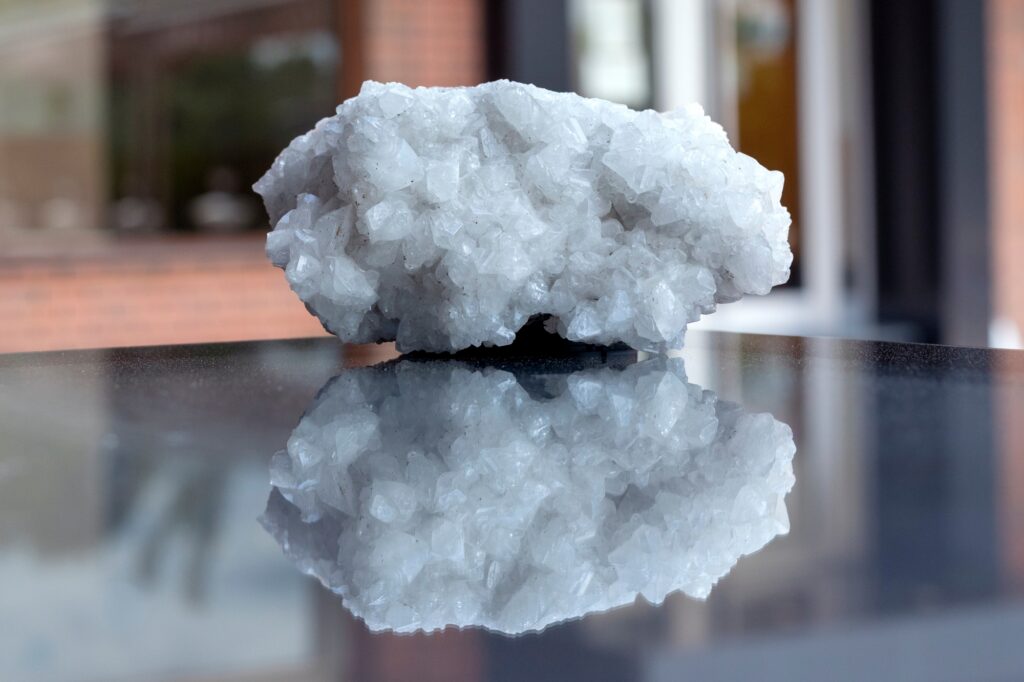
Borates are often described as commodity industrial minerals used in glass, detergents, or agriculture. While these applications are important, that framing understates the broader role that boron chemistry plays across modern manufacturing. In practice, borates are deeply embedded in a wide range of industrial material systems where their chemical behavior provides performance characteristics that are difficult to replicate with other compounds.
From fiberglass and specialty glass production to advanced ceramics, agricultural micronutrients, and flame retardant formulations, borates contribute a unique combination of thermal, structural, and chemical properties. These characteristics make boron compounds essential across multiple sectors of advanced manufacturing.
Because these properties arise from fundamental aspects of boron chemistry, substitution is often more difficult than buyers initially assume.
Borates in Fiberglass and Specialty Glass
One of the largest industrial uses of borates is in the production of fiberglass and specialty glass. Boron compounds such as boric acid and boron oxide are incorporated into glass formulations to improve both manufacturing efficiency and final material performance.
In glass chemistry, boron oxide functions as a network former within silica-based glass structures. The presence of boron helps reduce melt viscosity and lowers the temperature required to produce glass from silica-rich mixtures. Lower melting temperatures improve furnace efficiency and reduce energy consumption during glass production¹.
Boron also improves the chemical durability and thermal shock resistance of glass. These properties are particularly important in fiberglass manufacturing, where glass fibers must maintain strength under mechanical stress and environmental exposure.
Fiberglass reinforced materials are widely used in construction products, transportation components, electrical insulation, and industrial composites. Borosilicate glass systems are also widely used in laboratory glassware, pharmaceutical manufacturing equipment, and certain electronics applications due to their resistance to rapid temperature changes².
Because borates influence both the melting behavior and the structural properties of glass, removing them from glass formulations often requires significant changes to both processing conditions and material composition.
Boron in Ceramics and Frit Systems
Boron compounds also play a critical role in ceramic manufacturing, particularly in glaze and frit systems used in both industrial and consumer ceramics.
In ceramic formulations, boron oxide functions as a flux. Fluxing agents help reduce the temperature at which ceramic materials vitrify, or form glass phases during firing. Lower firing temperatures improve manufacturing efficiency while enabling more consistent surface coatings and improved adhesion between glazes and ceramic substrates.
Ceramic frits that contain borates help control melting behavior, surface smoothness, and chemical durability. These materials are widely used in architectural tiles, sanitary ceramics, and porcelain products. In industrial applications, boron-containing ceramics can also contribute to improved mechanical strength and chemical resistance.
Because borates influence both firing temperature and glaze chemistry, replacing them in ceramic systems can require extensive reformulation and testing to achieve comparable results.
Agricultural Micronutrient Applications
Beyond manufacturing, boron also plays an essential role in agricultural chemistry. Boron is a micronutrient required for plant growth and reproductive development. It supports processes such as cell wall formation, sugar transport within plants, and pollen development in many crop species³.
When soils contain insufficient boron, crops may exhibit reduced growth, poor fruit development, or lower yields. Borate compounds are therefore commonly included in fertilizers and soil treatments designed to correct micronutrient deficiencies.
Agricultural borates are typically formulated in soluble forms that allow plants to absorb the nutrient through root uptake or foliar application. Because the required concentration range for boron is relatively narrow, proper formulation and application are important to avoid both deficiency and toxicity.
Although agricultural uses differ from industrial applications, they illustrate the versatility of boron chemistry across biological and materials systems.
Borates in Flame Retardant Systems
Borates are also used in several flame retardant systems where they contribute to fire resistance through multiple mechanisms.
Certain boron compounds can promote the formation of protective glassy layers when exposed to high temperatures. These layers act as thermal barriers that help slow the spread of flames and reduce heat transfer into underlying materials.
Borates may also act synergistically with other flame retardant additives. In some formulations, they improve char formation or reduce smoke generation during combustion, which can improve overall fire performance in treated materials⁴.
Borate-based flame retardants are commonly used in wood treatments, insulation materials, coatings, and certain polymer systems. Because borates often function as part of multi-component fire retardant formulations, removing them from these systems can require extensive reformulation to maintain equivalent performance.
Buffering and pH Control in Industrial Chemistry
Another useful property of boron chemistry is its buffering capability. Borate ions can help stabilize pH levels in aqueous systems by interacting with hydrogen ions and moderating changes in acidity.
This buffering behavior allows borates to maintain relatively stable chemical conditions in certain industrial processes. As a result, boron compounds are used in some water treatment systems, metalworking fluids, and chemical processing environments where pH stability is important for performance.
The combination of buffering behavior, thermal stability, and chemical compatibility contributes to the versatility of borates across industrial chemistry applications.
Supply Concentration and Sourcing Considerations
Although borates are used across multiple industries, global production of boron minerals is relatively concentrated geographically. A large portion of global borate supply originates from major deposits located in Turkey and the United States⁵.
Because borate production is concentrated in a limited number of mining regions, supply conditions can be influenced by production policies, geopolitical factors, and mining operations within those regions.
For manufacturers that depend on borate compounds in glass production, ceramics, agriculture, and specialty chemical systems, understanding the global supply landscape can be an important part of long-term sourcing strategy.
The Enduring Role of Boron Chemistry
Borates occupy a unique position in modern industrial materials. Their ability to modify melting behavior, improve chemical durability, support plant nutrition, contribute to fire resistance, and stabilize chemical systems gives boron compounds a versatile and often irreplaceable role across multiple industries.
Because these properties arise from fundamental aspects of boron chemistry, replacing borates in industrial systems often requires substantial reformulation and process changes. In many cases, alternative materials cannot replicate the same combination of thermal, structural, and chemical performance.
As advanced manufacturing sectors continue to evolve, boron chemistry is likely to remain an important component of many industrial materials systems for years to come.
References
- Rio Tinto Borates. Glass and Fiberglass Applications of Boron.
https://www.borax.com/products/applications/glass-textile-fiberglass - U.S. Geological Survey. Boron Statistics and Information.
https://www.usgs.gov/centers/national-minerals-information-center/boron-statistics-and-information - Encyclopaedia Britannica. Boron Chemical Element.
https://www.britannica.com/science/boron-chemical-element - U.S. Borax. Boron in Fire Retardancy.
https://www.borax.com/products/applications/fire-retardancy - U.S. Geological Survey. Mineral Commodity Summary: Boron.
https://pubs.usgs.gov/periodicals/mcs2024/mcs2024-boron.pdf
Related Posts:
Jun 22nd, 2025
Beyond Lithium: Alternative Materials Powering Sustainable Energy Storage
Read More Beyond Lithium: Alternative Materials Powering Sustainable Energy Storage
Feb 4th, 2025
Remembering Jillian: A Heart That Touched Us All
Read More Remembering Jillian: A Heart That Touched Us All
Jun 22nd, 2025
Purifying the Future: Advanced Materials in Water Filtration
Read More Purifying the Future: Advanced Materials in Water Filtration