AI’s Hidden Resource Challenge: The Advanced Filtration Materials Powering Data Center Growth

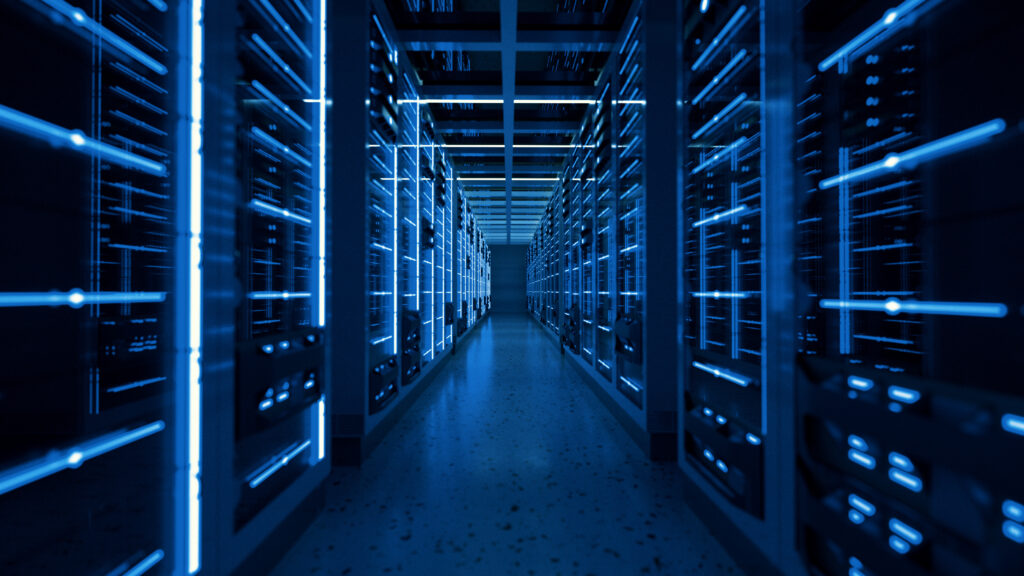
Conversations about artificial intelligence infrastructure tend to focus on semiconductors, electricity demand, and the race to build new computing capacity. Yet behind every hyperscale data center is a resource challenge that receives far less attention: water. Modern data centers require significant volumes of water for cooling, and much of that water must be treated to demanding purity standards before it ever reaches a heat exchanger or cooling tower.
As AI workloads accelerate data center construction around the world, demand is growing not only for power and computing hardware but also for the water treatment systems that keep these facilities running. Those systems depend on a family of specialty filtration and treatment materials, including activated carbon, activated alumina, ion exchange resins, zeolites, and diatomaceous earth, that rarely appear in headlines but are quietly essential to AI infrastructure.
The Scale of AI’s Water Demand
The growth of AI computing is reshaping resource consumption in the data center sector. According to the Lawrence Berkeley National Laboratory, U.S. data centers consumed approximately 4.4% of the nation’s electricity in 2023, with projections suggesting that share could reach between roughly 7% and 12% by 2028 as AI deployment expands1. Alongside that electricity comes substantial water use, both directly through evaporative cooling systems and indirectly through the water consumed in electricity generation.
Researchers studying the water footprint of AI have estimated that global AI demand could account for 4.2 to 6.6 billion cubic meters of water withdrawal by 2027, more than the total annual water withdrawal of several small countries combined2. Training a single large language model in a modern data center can directly evaporate hundreds of thousands of liters of clean freshwater2. These figures help explain why water strategy has become a board-level topic for data center operators, and why water treatment infrastructure is expanding alongside computing capacity.
Why Data Center Cooling Requires Treated Water
Data centers reject enormous amounts of heat, and water remains one of the most efficient media for moving that heat. Evaporative cooling towers, chilled water loops, and increasingly common liquid cooling systems all depend on water that meets tight chemical specifications.
Untreated water introduces three persistent problems into cooling infrastructure. Dissolved minerals such as calcium, magnesium, and silica form scale on heat exchange surfaces, reducing thermal efficiency. Dissolved oxygen, chlorides, and imbalanced pH accelerate corrosion in piping and heat exchangers. Organic matter and nutrients support biological fouling that can clog systems and create operational risks.
In evaporative systems, these problems compound over time. As water evaporates, the dissolved solids left behind become progressively more concentrated, which means makeup water must be treated and system water must be continuously conditioned. Facilities using direct-to-chip liquid cooling face even stricter requirements, since the water circulating near sensitive electronics must be maintained at high purity to prevent scaling and conductivity issues inside precision cooling loops.
Adsorption Media: Activated Carbon and Activated Alumina
Water treatment trains in industrial facilities typically begin with adsorption media. Activated carbon is among the most widely used, removing chlorine, chloramines, and dissolved organic compounds from incoming water. This step matters not only for water quality itself but also for protecting downstream equipment; residual chlorine degrades reverse osmosis membranes and ion exchange resins, so carbon beds often serve as the first line of defense for the more sensitive stages that follow.
Activated alumina, a porous form of aluminum oxide, provides targeted adsorption of contaminants such as fluoride, arsenic, and silica. Silica control is particularly relevant in cooling applications, because silica scale is among the most difficult deposits to remove once it forms on heat transfer surfaces. Activated alumina also serves as a desiccant in compressed air and gas drying systems that support data center mechanical infrastructure.
Ion Exchange Resins and High-Purity Water
Where cooling systems or humidification equipment require demineralized water, ion exchange resins do much of the work. These engineered polymer beads exchange dissolved ions in the water for ions held on the resin, allowing operators to soften water by removing calcium and magnesium or to demineralize it almost completely using paired cation and anion resins.
Mixed-bed polishing resins can produce water approaching theoretical purity, a capability borrowed from the semiconductor and power industries that is increasingly relevant as liquid cooling adoption grows. Because resins are regenerated and eventually replaced on predictable cycles, they also represent a recurring consumable demand that scales directly with the number of facilities in operation.
Zeolites, Diatomaceous Earth, and Particulate Control
Natural and synthetic zeolites bring a distinctive combination of properties to water treatment. These hydrated aluminosilicate minerals have crystalline structures with uniform pore sizes, giving them useful adsorption, ion exchange, and molecular sieve behavior. Wastewater treatment is among the major commercial markets for natural zeolites, where they are used to capture ammonium and certain heavy metals3. In data center water systems, zeolite media can support both filtration and ion exchange functions, and zeolite-based media are also used in adjacent applications such as gas drying and air handling.
Diatomaceous earth, a soft siliceous sedimentary rock composed of fossilized diatoms, is used principally as a filter aid4. Its fine, porous structure allows it to capture very small suspended particles while maintaining high flow rates, making it valuable for clarifying water before finer treatment stages. Ceramic filtration elements play a complementary role where durability and chemical resistance matter, tolerating aggressive cleaning cycles that would degrade polymeric media.
Material Selection Considerations for Water Treatment Systems
Designing a treatment train for a hyperscale facility is a materials selection exercise as much as an engineering one. Feedwater chemistry varies significantly by region, and the right combination of media depends on which contaminants must be controlled, at what concentrations, and at what flow rates. Particle size distribution, surface area, purity, and mechanical stability all affect how a given media performs in service and how frequently it must be replaced.
Consistency matters as much as initial performance. A media lot that varies in particle size or purity can alter pressure drop, breakthrough behavior, and replacement schedules across an entire facility. For operators managing dozens of sites, specifying filtration materials to tight, repeatable standards is a practical requirement rather than a preference.
Supply Chain Implications for Filtration Media
The materials that support data center water treatment are produced through mining, chemical processing, and specialized manufacturing, and each has its own supply dynamics. Diatomite and natural zeolites come from regional mineral deposits with a limited number of producers. Activated carbon supply spans multiple feedstocks and geographies. Ion exchange resins are specialty chemical products whose availability follows broader chemical industry capacity.
As data center construction accelerates, procurement teams responsible for water treatment consumables face growing demand alongside the qualification challenges that come with any specialty material: verifying consistency between lots, securing reliable volumes, and maintaining documentation across suppliers. This is where working with an experienced specialty materials distributor can simplify the picture. Reade has supplied filtration media and adsorbents, including activated alumina, zeolites, diatomaceous earth, and specialty carbon products, across industrial water treatment applications for decades, and helps clients source materials to consistent specifications as their requirements scale.
Water as a Design Constraint for AI Infrastructure
The AI buildout is often described in terms of megawatts and GPUs, but water is becoming an equally important design constraint. Facilities are being sited with water availability in mind, cooling architectures are being selected partly on water efficiency, and treatment systems are being engineered for higher recovery and reuse.
All of those strategies depend on filtration and treatment materials performing reliably at scale. As AI infrastructure continues to expand, the specialty materials that purify, condition, and recycle water will remain a quiet but essential part of the story, another reminder that every digital revolution rests on a physical foundation.
References
- Lawrence Berkeley National Laboratory. 2024 United States Data Center Energy Usage Report. https://eta.lbl.gov/publications/2024-lbnl-data-center-energy-usage-report
- Li, P., Yang, J., Islam, M.A., Ren, S. Making AI Less “Thirsty”: Uncovering and Addressing the Secret Water Footprint of AI Models. https://arxiv.org/abs/2304.03271
- U.S. Geological Survey. Zeolites Statistics and Information. https://www.usgs.gov/centers/national-minerals-information-center/zeolites-statistics-and-information
- U.S. Geological Survey. Diatomite Statistics and Information. https://www.usgs.gov/centers/national-minerals-information-center/diatomite-statistics-and-information
Related Posts:
Jun 22nd, 2025
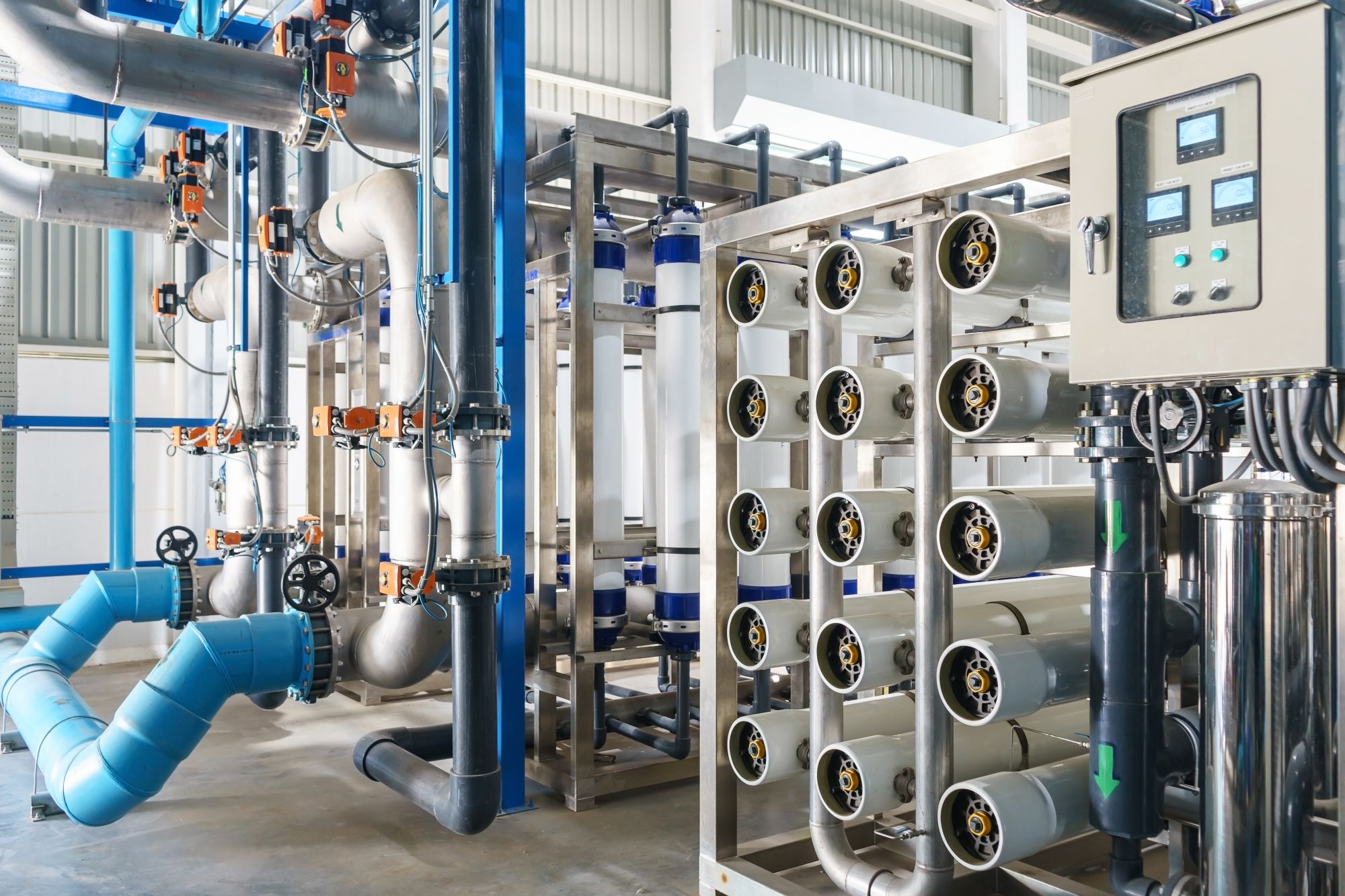
Purifying the Future: Advanced Materials in Water Filtration
Read More Purifying the Future: Advanced Materials in Water Filtration
Jan 23rd, 2024
Unveiling Precision in the Realm of Industrial Abrasives: A Comprehensive Comparison of Bauxite and Burundum Grinding Media in Industrial Applications.
Read More Unveiling Precision in the Realm of Industrial Abrasives: A Comprehensive Comparison of Bauxite and Burundum Grinding Media in Industrial Applications.
Jul 30th, 2026
Advanced Materials Powering the Next Era of Aerospace Innovation
Read More Advanced Materials Powering the Next Era of Aerospace Innovation